 Posted by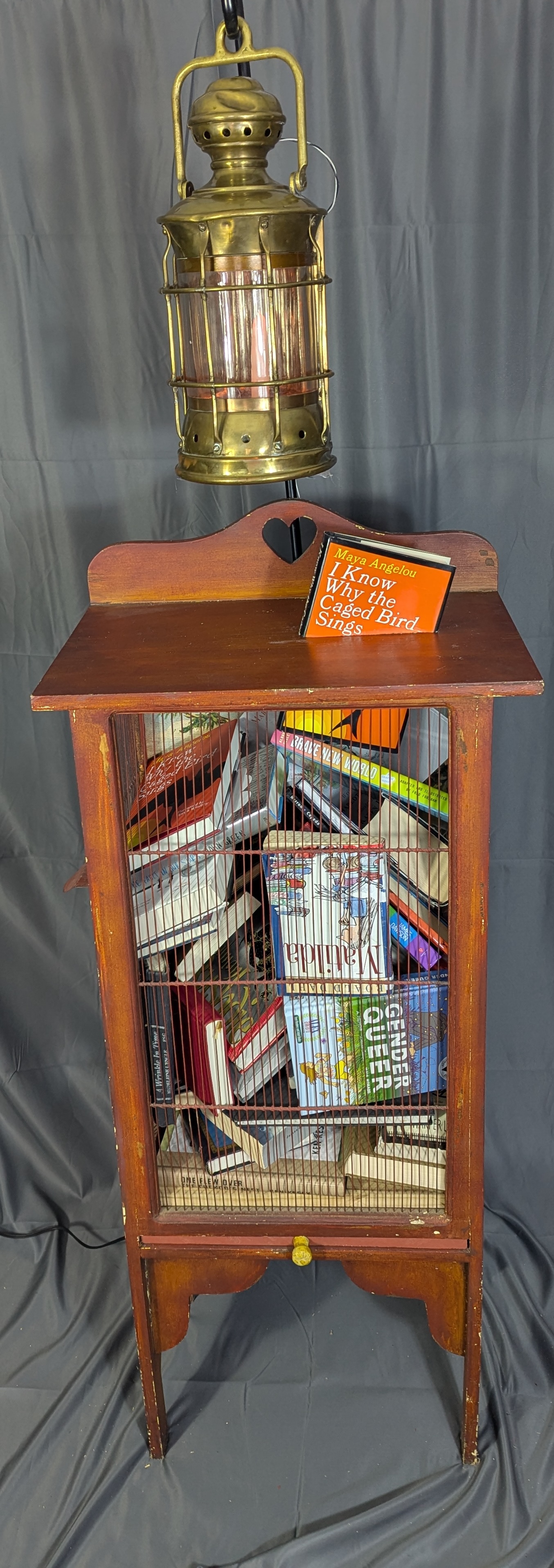
As an artist working in various media, there is the freedom to explore a wide range of ideas and issues. An artist is free to explore and learn about anything, limited only by one’s curiosity. As a person who strongly believes that language is an infinite source of expression of ideas and emotions, the growing movement to ban books is an act of censorship. Our constitution provides citizens with an expectation of privacy and reading is a private act.
As a democratic society, we have come to a tenuous balance regarding the freedom of speech. Agreeably, we cannot yell “Fire” in a movie theater (when there is no fire). Nor can you write hurtful words which defame or incite violence. But this should not limit the freedom to write and to read about lifestyles different from the majority.

This subject became personal for me. In 1975, the Island Trees Union Free School District school board banned nine books at a local high school. 1 My mother taught at the school and was an advocate against the banning. Five students brought a federal lawsuit against the school district which ultimately went before the Supreme Court. There was no majority decision. In a plurality opinion for the court, Justice William Brennan wrote that “local school boards may not remove books from school library shelves simply because they dislike the ideas contained in those books.”
In “Language Lost”, the birdcage becomes a metaphor for imprisoning a free creature and limiting its movement, much like book banning can limit a mind’s explorations. The birdcage is filled with books banned over the last century. Some reasons are for acts of racism, diverse sexuality, family situations, or satanism. Whatever the reason, these books reflect our world, culture and attitudes.
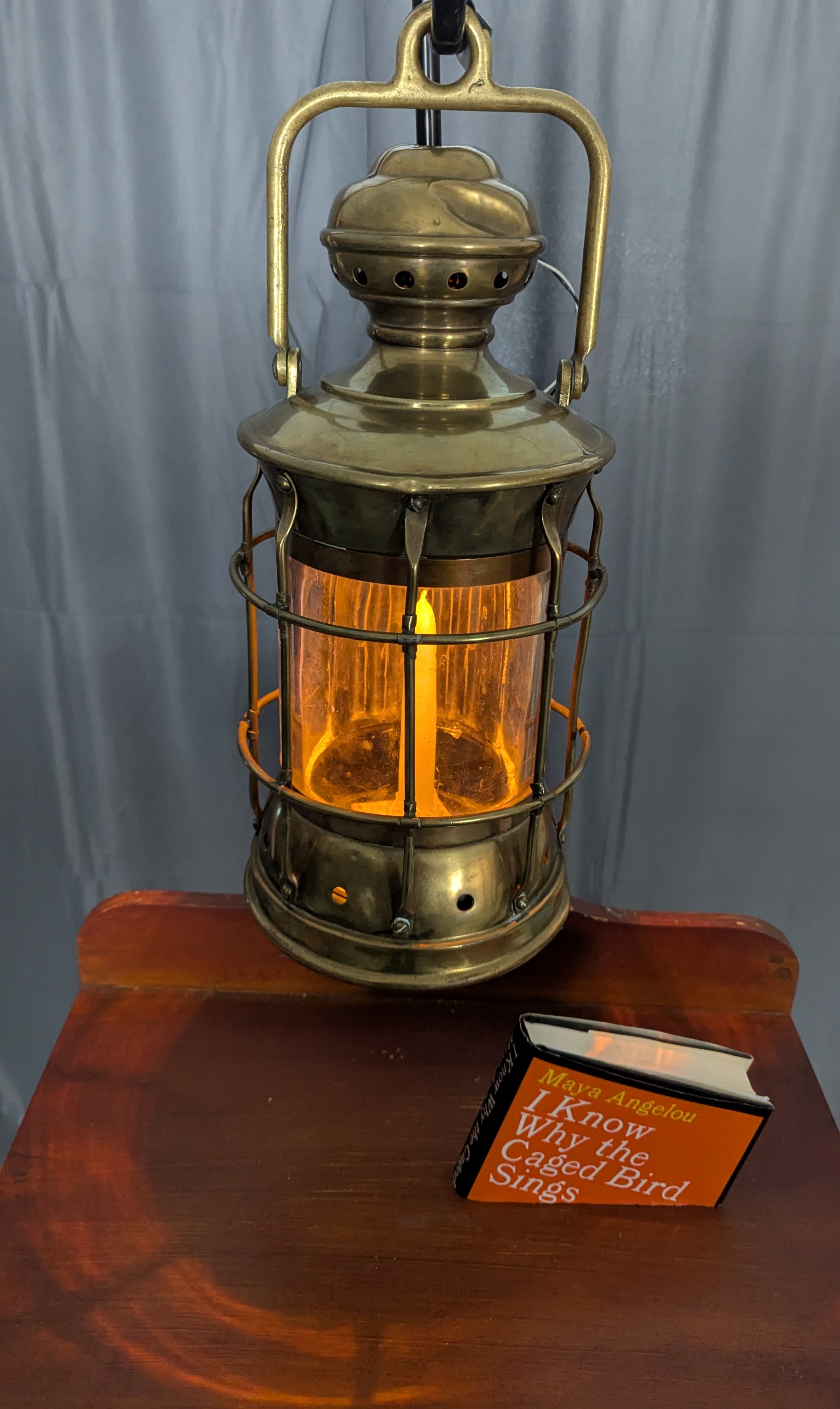
The hurricane lamp hanging above the birdcage, a flicking light at times glows bright to give light in a storm. Other times, its low glow sometimes fades to complete darkness. The lamp shows how without the freedom of expression, the light of knowledge and freedom can grow dim.
Most reasons given for banning books revolve around protecting children from sexual subject matter and racism. Sadly, the bans around sexuality mostly revolve around issues against the LGBTQIA+ community and the bans regarding racism stem from white fragility.
As with any controversial subject, there are grey areas. The American Library Association’s stance is that “Parents and teachers have a responsibility to prepare the young to meet the diversity of experiences in life to which they will be exposed, as they have a responsibility to help them learn to think critically for themselves. These are affirmative responsibilities, not to be discharged simply by preventing them from reading works for which they are not yet prepared.”2
As with many issues in childrearing, if you are involved in your child’s lives and education, having open discussions will broaden their world of knowledge and empathy, and the world becomes a more tolerant place to live.
1 “Board of Education, Island Trees Union Free School District No. 26 v. Pico by Pico.” Oyez, http://www.oyez.org/cases/1981/80-2043.
2 “The Freedom to Read Statement”, American Library Association, July 26, 2006
https://www.ala.org/advocacy/intfreedom/freedomreadstatement (Accessed January 2, 2025)
Document ID: 24cc13f0-22e4-4c16-ba92-d68ee65b9e28
This project is made possible with funds from the Statewide Community Regrants Program, a regrant program of the New York State Council on the Arts with the support of the Office of the Governor and the New York State Legislature and administered by Arts Mid-Hudson.
 Art With Held --- David Held